Melrose Station embedded history
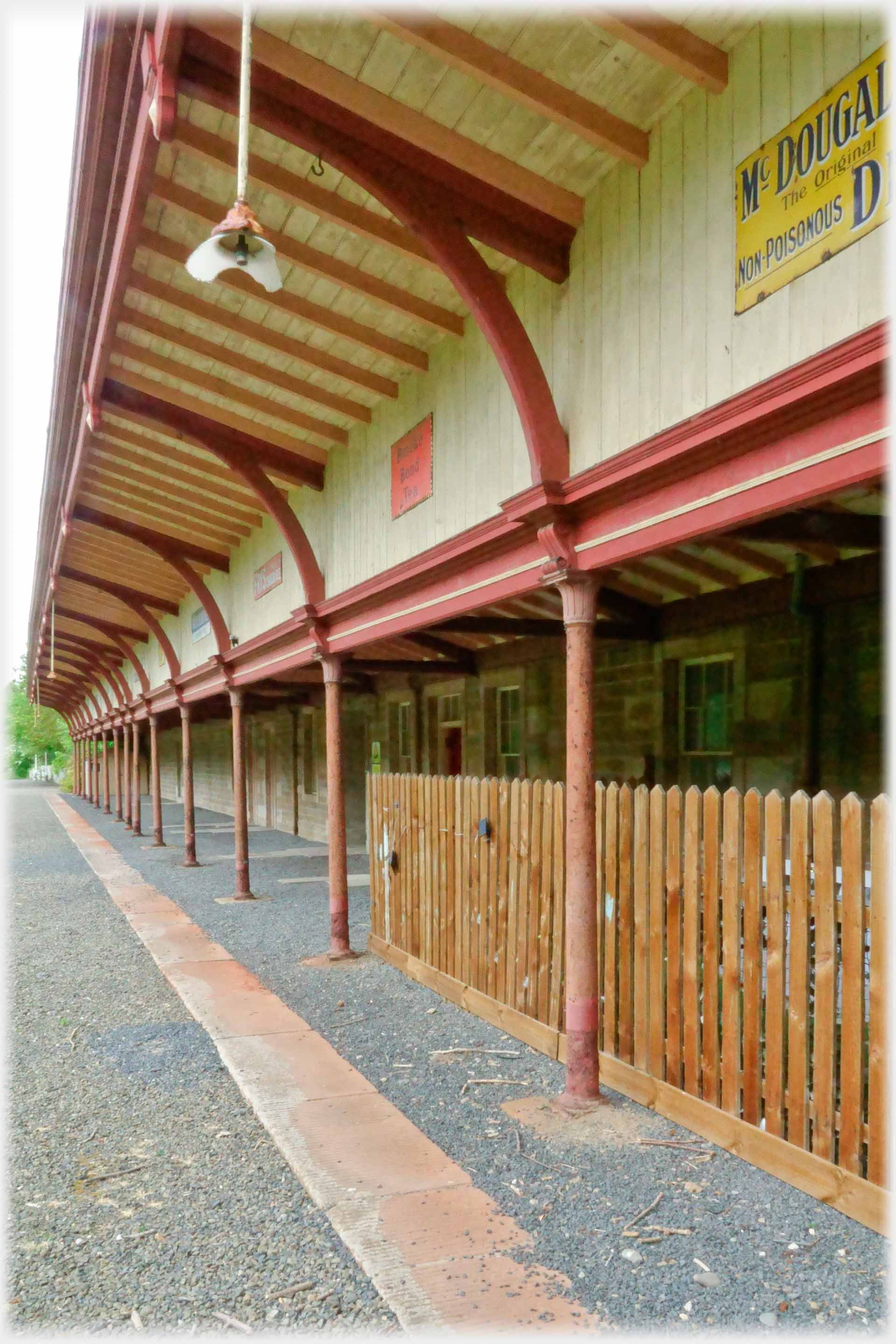
A few weeks ago I went to Melrose and sought the bookshop that was opened on the station after it ceased to receive trains. There was no sign of it, and asking around I could find no-one who had lived in the town for as much as 30 years, happily (for my faith in my memory’s sake) I did eventually find one person who remembered the bookshop while on visits to the town in her 1980s youth. The station was closed in the late 60s and it was a decade or so before the bookshop opened. The railway line became the bypass for Melrose, so use was made of the track; rather often such use did not follow closure, tracks being abandoned, a material loss after the great effort and investment in their foundation. The forgotten bookshop illustrates another kind of loss, the loss of a community’s conscious roots. The station buildings are mostly empty, and money is currently being sought to preserve a structure for which, due to population churn, there is no collective memory. Communities are formed from their embedded history, without such glue what can hold them together?
embedded history - Go to a page where Neil Gunn and Wendell Berry contribute to an aspect of such Embedded History, in the Mosaic Section of this site.
The Station platform at Melrose in the Scottish Borders, now sits beside the Merose by-pass - discreetly out of sight to the left of this photograph. Old adverts have been included in previous restoration work on the station, and the onetime gas lighting, (with its broken shades) seems to have been preserved.
Taken on a Sony DSC-RX10M3 on 20/5/2026 at 11.30am. 1/320th at f/16 ISO rated at 3200. Focal length: 27mm (35 mm equiv).

Saturday 24th October 2026
 ...guide to this site